

Is Showit or Squarespace a better website platform?
*Written in 2019, updated July 2023*
After developing many sites on Squarespace, WordPress and Showit, I have a good understanding of each platform and which one would be the best for you! I don’t think there is a right or wrong answer to this question, so I will break down the advantages of each and let you decide.
As a side note if WordPress is still in the running, read this blog next. If you are trying to decide between Wix or Squarespace, read THIS BLOG.
- If you want to use Squarespace, use this link to save 10% off your first subscription of a website — use the code RRC10
- If you want creative freedom, Showit is my favorite website design platform! Get a free month (a credit card is required – cancel at any time) & try it out (Use code bekah at checkout)!
Okay, moving on:
Benefits of Squarespace:
1. Easier to navigate
If you are not tech-friendly this is probably your better choice as it is very clear, has an easier learning curve, and you can easily achieve an impressive site without coding. They have templates that are designed by designers and by just adding in your photos and verbiage you can have a fully-functioning, beautiful site.
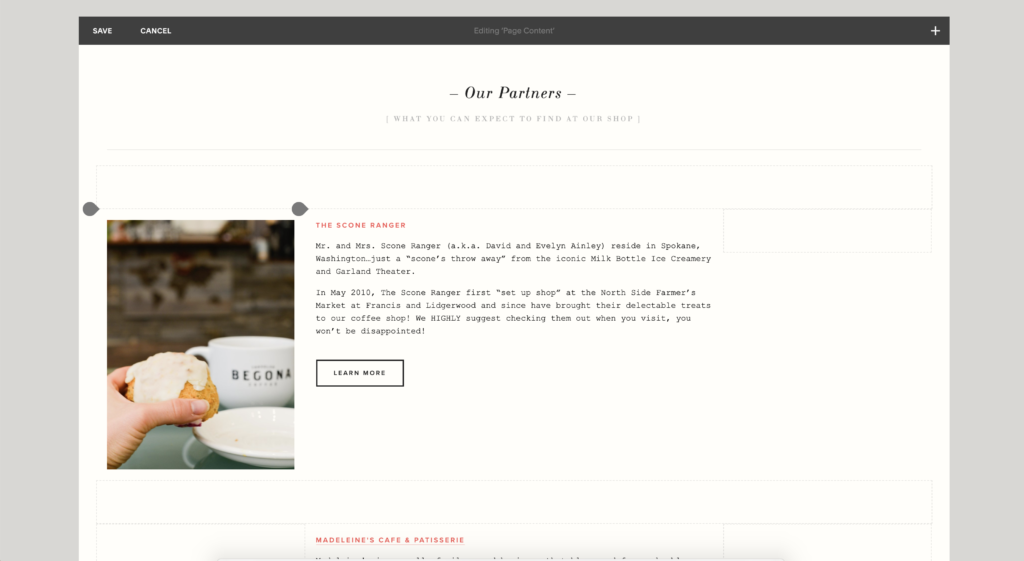
2. AMAZING support team
I have been nothing but impressed with Squarespace’s support team. Not only are they available Monday to Friday 4am to 8pm ET, but you also are usually 2 or 3 in the queue so it doesn’t take them long to get to you, they understand your questions even if you don’t know how to phrase them, and they will do a screen flow of EXACLY how to accomplish what you don’t understand ON YOUR SITE so you just have to copy what their doing. I can see why they are award-winning!
*2022 update I have noticed their team be not as helpful as more and more people have started to become Squarespacers. If you want the BEST customer support, I would go with Showit.
3. Great help forum
Since more people use Squarespace than Showit, there are more articles (and YouTube videos) about how to do certain things. In addition, because there are about 2 million live websites you can pretty much find a tutorial on YouTube or article on any question you have.
4. Everything is integrated
Can I just get an “Amen!” about how annoying plugins are?! You can do everything IN Squarespace. From email lists to implementing your Instagram feed to e-commerce, you can finish your site all in their user interface. With Showit you can get Shopify Lite for $9 a month and add it on to your site if you want to sell products or digital downloads, but sometimes it is nice to do everything in one platform.
5. Less expensive (but not by much)
You are able to achieve almost everything you need with the Squarespace business plan for $23 a month (they did increase it from $18 a few years ago so just know they may continue increasing the price), however in order to get a blog on Showit (which I highly suggest) you would need to go with their middle package which is $24 a month (they have stayed at this price for quite a while).
Benefits of Showit:
1. In terms of creative freedom, it is leaps and bounds better than ANY other platform (Wix, Squarespace, WordPress, etc.)
Even without coding, you can manipulate your Showit site to be EXACTLY how you want it. It’s a blank canvas waiting for you to put your creative juices ALLLL over it! On Squarespace if you want certain things to be changed, you may need to code (although with the implementation of Fluid Engine in 2022, Squarespace has become much more creatively-friendly).
2. You don’t need to transfer all your blogs
If you have a WordPress blog and move to Squarespace, you have to rewrite all your blog posts on Squarespace, so in terms of SEO that would be a big bummer. You would also need to relink your blogs on Pinterest to the new destination. Because Showit uses the WordPress blog as their blogging platform, they can just connect your old blog to the site when you have finished the design.
3. You can completely customize the mobile version
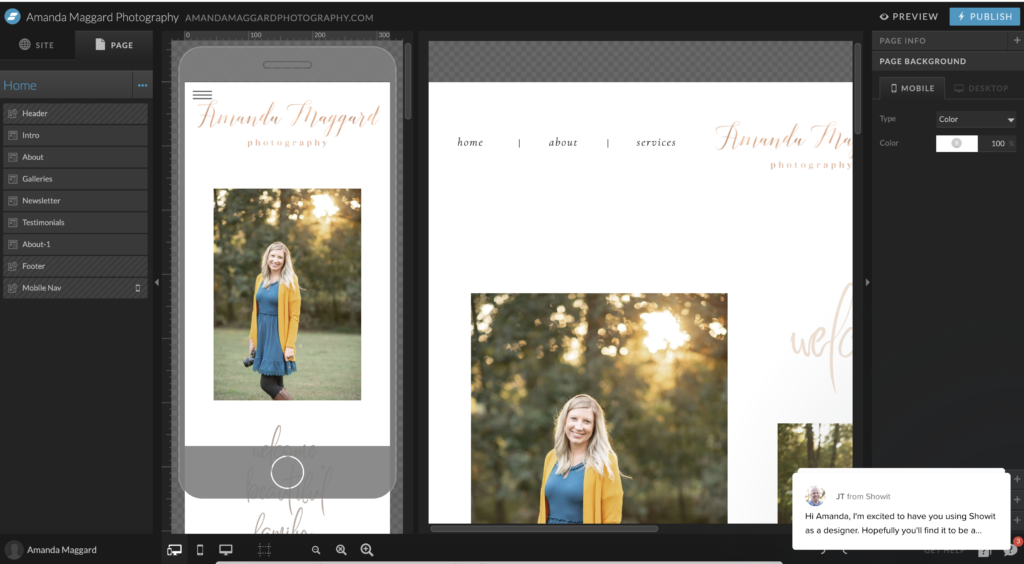
This is one of my favorite features. When you are designing on Showit you are given a computer and cell phone to see what your website will look like on both platforms. (Squarespace seems to be heading in this direction… copycats).
4. Better SEO
Honestly when it comes to SEO if you are adding in meta descriptions, proper page titles, and alt tag optimization, you are doing better than most people, however if you want to make sure that your main heading is correct and Google is pulling the proper SEO, then Showit is a better option. If you have no idea what that last sentence meant, check out this YouTube video.
5. It’s very similar to the Adobe programs
If you’ve dabbled in Adobe Illustrator or InDesign, you will get the hang of Showit pretty quickly. The icons and options are very similar, making it easy to transition.
Okay let’s add one more platform in here I ALWAYS get asked about : WIX
I almost never suggest Wix for many reasons.
- It doesn’t integrate nicely. For example if you post a new blog post it doesn’t automatically add it to your homepage. You have to do a lot of manual updating that seems so unnecessary.
- It is finicky with text size and the mobile view is weird and you end up having to delete things because it doesn’t work and isn’t responsive.
- It is very slow for changing the background color and photos
- Terrible customer support even with the paid plan
Did you skip to the bottom? That’s okay, I do that too. Here’s the gist of it – if you want complete design freedom, better customer support, and have more time on your hands, I would recommend Showit. If you want an easier learning curve and to get the site out there and you are fine with similar templates to other sites, Squarespace is a great choice.
If you need help deciding the perfect platform for you, please don’t hesitate to reach out (bekah@rebekahreadcreative.com)
Want to know more about Squarespace and Showit?
Are you worried about finding the right website platform for you (or your clients)?
Here are some other blog/ YouTube videos I suggest for your research!
- PRO SQUARESPACE : https://www.paigebrunton.com/blog/showit-vs-squarespace
- PRO SHOWIT : https://digitalgracedesign.com/showit-vs-squarespace/
Read other blogs about: Website Design
I’ve got messy hair and a thirsty heart.
I overshare my life, and have an ultra-expressive personality. Some words people use to describe me are: helpful, real, fun, creative, authentic, and kind.
Elphaba from Wicked is kind of my alter-ego (I was a fan LONG before the movie-adaptation - anyone else?!). I am always trying to forge my own path and make a difference in the World, somehow, someway, while also constantly criticizing myself and trying to become the better version of me.
Quality conversations + coffee come easy to me.
I’ve never had an issue connecting naturally with others (probs because I can go on and on about my life story, not that it is interesting, I just process externally...)

I find so much joy in helping and serving others and I give myself fully to whatever it is that engages me, whether that is running a 50k or creating a website in a day.


[…] Showit – For creating and managing my website […]
Hello!
Hello,
I am deciding between SmugMug, Showit, and Squarespace, ugh.
I am launching a photography business and wondering if I should use one integrated platform like SmugMug (webisre, commerce, and private galleries all in one) or have a separate website and commerce/gallery site like Pass.
Showit has designers who charge $7000 and I just don’t have that because I have no sales, yet!
What are your thoughts for a photography business?
PS. I need easy Lighroom integration too!
Thank you!
Hello Tori!
I love Squarespace and Showit, but don’t know a lot about SmugMug. Many photographers love Showit – it was actually created for photographers! I love that you can customize it to be EXACTLY what you want it to be, however that also makes it a bit more challenging to learn. Squarespace is a little bit more template based, so if your style is more flowy/ elegant I would lean towards Showit.
I am a Showit designer and my package starts at $2,500, but I totally understand that that can be a big investment right off the bat! I also offer a day design service where I can set up your home page, about page, and contact page. This service is $600. You can learn more at https://rebekahreadcreative.com/day.
If you want to DIY it completely, I would lean more towards Squarespace because I think overall it is easier to understand. I hope that helps!
Bekah
[…] https://rebekahreadcreative.com/is-showit-or-squarespace-a-better-website-platform/ […]